Product Description
Product Description
Product Parameters
| Standard | GB, ISO, ANSI, DIN |
| Type | Standard A and standard B precision roller chain, conveyor chain; |
| special chain with accessories, welding chain, leaf chain and sprocket | |
| ANSI chain No. | 40,50,60,80,100,120,140,160,180,200,240; |
| C40,C50,C60,C80,C100,C120,C140,C160; | |
| DIN/ISO chain No. | 08A,10A,12A,16A,20A,24A,28A,32A,36A,40A,48A; |
| C08A,C10A,C12A,C16A,C20A,C24A,C28A,C32A; | |
| Application | Food processing, pharmaceutical and chemical industries, electronics, machinery; |
| household appliances, automotive manufacturing, metallurgy, sewage treatment | |
| Series | A series, B series |
More Products
Advantage
Certifications
DETAILS ABOUT CZPT CHAIN
Exhibition
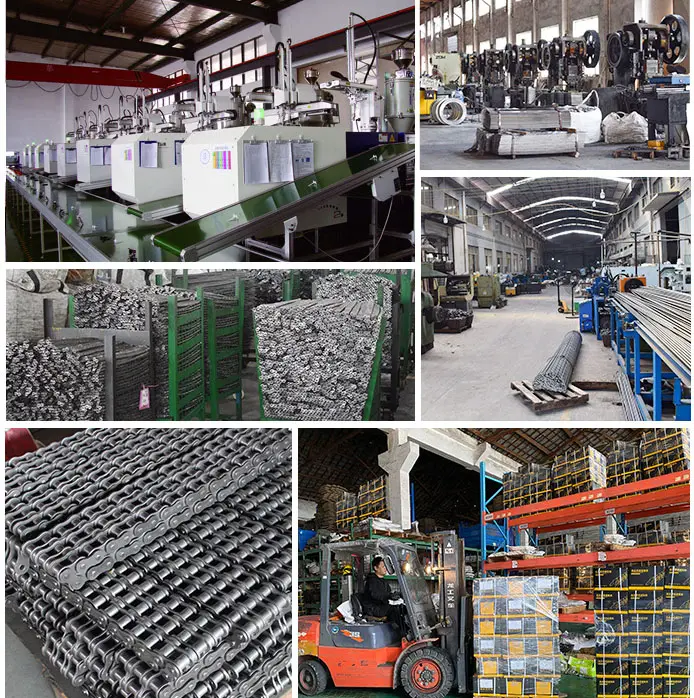
Workshop
Application
Packaging Details
Shipping
FAQ
1. Are you a manufacturer or trade Company?
We are a factory founded in 1997 with a trade team for international service.
2. What terms of payment do you usually use?
T/T 30% deposit and 70% against document, Western Union, L/C at sight
3. What is your lead time for your goods?
Normally 35 days after confirmed order. 30 days could be available in the low season for some items (during May to July), and 45 days during the new year and hot season ( Jan to March).
4. Samples
For customers who need sample confirmation before ordering, please bear in mind that the following policy will be adopted:
1) All samples are free of charge with a maximum value not exceeding USD 100.
2) The courier cost for the first-time sample sending will be charged by the consignee. We will send the samples with freight to be collected. So please inform your account with FedEx, UPS, DHL, or TNT so that we can proceed promptly.
3) The first-time courier cost will be totally deducted from the contract value of the trial cooperation.
4) OEM/ODM are both available.
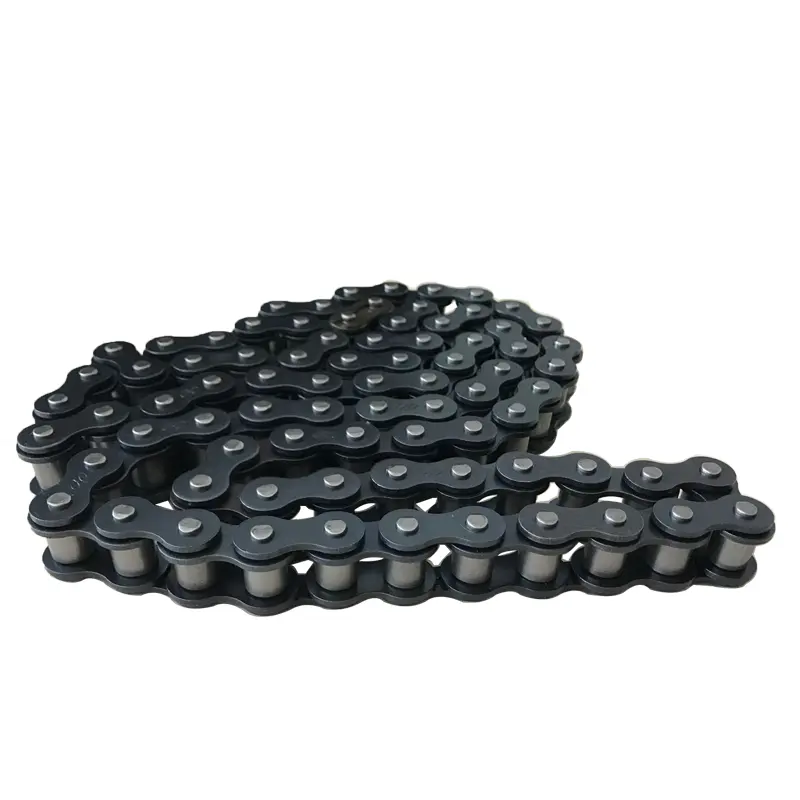
| Usage: | Transmission Chain, Conveyor Chain, Dedicated Special Chain |
|---|---|
| Material: | Stainless steel |
| Surface Treatment: | Polishing |
| Feature: | Heat Resistant |
| Chain Size: | 1/2"*3/32" |
| Structure: | Roller Chain |
| Samples: |
US$ 0/Foot
1 Foot(Min.Order) | |
|---|
| Customization: |
Available
| Customized Request |
|---|
How do roller chains perform in extreme weather conditions?
Roller chains are designed to perform reliably in a wide range of operating conditions, including extreme weather conditions. Here’s a detailed answer to the question:
1. Temperature Extremes: Roller chains can withstand a wide range of temperatures, both high and low. The performance of the chain depends on the specific material used and its temperature rating. For example, stainless steel chains are suitable for high-temperature applications, while specialty chains with low-temperature lubricants are available for cold environments.
2. Corrosion Resistance: Roller chains can be manufactured using corrosion-resistant materials such as stainless steel or with specialized coatings to enhance their resistance to rust and corrosion. This makes them suitable for outdoor applications where exposure to moisture, humidity, and other environmental factors is common.
3. Lubrication: Proper lubrication is crucial for the performance of roller chains in extreme weather conditions. Lubricants with suitable viscosity and temperature range should be used to ensure smooth operation and minimize wear. In some cases, lubrication-free chains with self-lubricating properties can be used to eliminate the need for external lubrication.
4. Sealing and Protection: Roller chains can be equipped with additional sealing mechanisms to protect against the ingress of dirt, dust, and other contaminants. Sealed or encapsulated chains feature protective covers or seals that prevent debris from entering the chain and affecting its performance, making them more suitable for extreme weather conditions.
5. Maintenance and Inspection: Regular maintenance and inspection are essential for ensuring the optimal performance of roller chains in extreme weather conditions. This includes cleaning the chains, checking for signs of wear or damage, and replacing any worn-out components. Proper tensioning and alignment should also be maintained to prevent premature failure.
It’s important to consult the manufacturer’s specifications and recommendations for the specific roller chain and its intended application in extreme weather conditions. By selecting the appropriate materials, lubrication, and protection mechanisms, roller chains can provide reliable and efficient power transmission even in challenging environmental conditions.
How do roller chains handle static loads?
Roller chains are primarily designed for transmitting power and handling dynamic loads, which involve motion and varying forces. However, roller chains can also handle static loads to some extent. Here’s a detailed answer to the question:
1. Load Distribution: When a roller chain is subjected to static loads, the weight or force is evenly distributed across multiple rollers and pins. This helps to distribute the load more effectively and reduces stress concentrations on individual components. The load is transferred from one roller to another through the pins, ensuring a more balanced distribution.
2. Stiffness: Roller chains possess a certain degree of stiffness that enables them to resist static loads. The rigid construction of the chain, including the link plates and pins, helps maintain the integrity of the chain under static conditions. This stiffness allows the chain to support the applied load without excessive elongation or deformation.
3. Lubrication: Proper lubrication is essential for roller chains to handle static loads effectively. Lubrication helps reduce friction and wear, which can occur even under static conditions due to the weight of the load. Adequate lubrication ensures smooth movement of the chain and minimizes the risk of surface damage or increased friction during load-bearing.
4. Chain Preload: In some cases, applying a pre-load or initial tension to the roller chain can help improve its ability to handle static loads. The pre-load helps to eliminate any slack or looseness in the chain, enhancing its rigidity and reducing the potential for excessive elongation or misalignment when subjected to static forces.
While roller chains can handle static loads, it’s important to note that they are primarily designed for dynamic applications involving motion. Excessive static loads or prolonged exposure to static conditions may lead to increased wear, elongation, or deformation of the chain. In scenarios where the majority of the load is static, alternative power transmission systems or load-bearing mechanisms may be more suitable.
What are the different types of roller chains available?
Roller chains come in various types and configurations to suit different applications and requirements. Here’s a detailed answer to the question:
1. Standard Roller Chain: This is the most common type of roller chain and is widely used in general-purpose applications. It consists of inner and outer plates, rollers, and pins.
2. Double Pitch Roller Chain: Double pitch roller chains have twice the pitch length of standard roller chains. They are commonly used in applications where slower speeds and lighter loads are present, such as conveyor systems.
3. Heavy-Duty Roller Chain: Heavy-duty roller chains are designed to withstand higher loads and more demanding operating conditions. They feature thicker plates, larger rollers, and stronger pins, offering increased strength and durability.
4. Stainless Steel Roller Chain: Stainless steel roller chains are made from corrosion-resistant stainless steel material. They are suitable for applications where resistance to moisture, chemicals, and harsh environments is required, such as food processing, pharmaceutical, and marine industries.
5. Nickel-Plated Roller Chain: Nickel-plated roller chains have a layer of nickel plating on the outer plates, providing additional corrosion resistance. They are often used in applications where protection against rust and wear is essential.
6. O-Ring Roller Chain: O-ring roller chains have O-ring seals between the outer plates and rollers. The O-rings help retain lubrication and prevent contamination, resulting in reduced maintenance requirements and extended chain life.
7. Lube-Free Roller Chain: Lube-free roller chains incorporate self-lubricating bushings or rollers that eliminate the need for external lubrication. They are suitable for applications where maintenance-free operation and clean environments are required.
8. Attachment Roller Chain: Attachment roller chains have special attachments on the outer plates, allowing for the attachment of various accessories or components. They are commonly used in applications such as conveying, lifting, or indexing systems.
9. Silent Chain: Silent chains, also known as inverted tooth chains, have tooth-shaped links that engage with the sprockets. They offer smooth and quiet operation and are often used in applications where noise reduction is critical, such as timing drives.
10. Leaf Chain: Leaf chains consist of interlocking links with large flat plates connected by pins. They are commonly used in applications requiring high strength and durability, such as forklifts and lifting devices.
Each type of roller chain has its own unique features and advantages. The selection of the appropriate type depends on factors such as load capacity, speed, environment, and specific application requirements.


editor by CX 2023-08-11